Requirements for Food Product Transportation
Paata Mefurishvili, Head of Logistics at the international transport company Kairos Logistics, discusses the food supply chain.
The food and grocery industry is growing and becoming increasingly in-demand worldwide. Years ago, various types of food were only available regionally, but today it is common to wake up in Georgia and enjoy coffee imported from South America and Italian confectionery products for breakfast. Moreover, consumers now demand access to a more diverse and higher-quality assortment.
Behind this demand lies a quite extensive logistics chain that handles the export and import of products, which is why logistics plays a crucial role in the development of the food and grocery industry.
I will try to introduce you to several key requirements that emerge during the transportation of food products:
Transit Times
Maintaining a short transit period is one of the most important issues when transporting food products. Ready-processed products are not viable for a long time, so it is essential that transportation is completed quickly so that the product has sufficient time for retail sale after the logistics processes are finished.
Temperature Regime Control
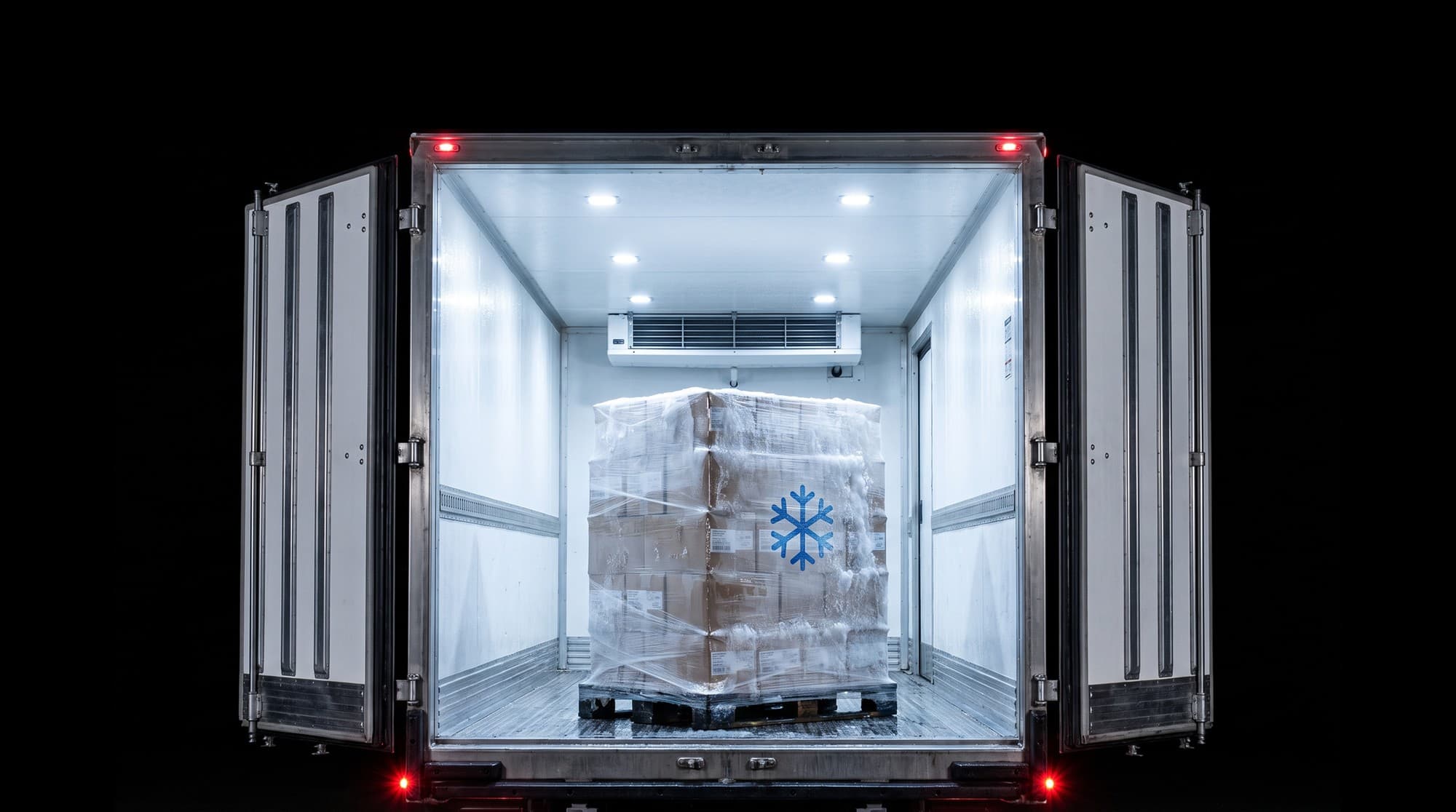
Maintaining quality is especially important for the food industry—this is a case where compromise is impossible. Product quality depends both on the manufacturer and on correct logistical operations. Every product requires strict temperature control during transportation. In the trailer section of our vehicles, our transport facilities are equipped with telematics systems that allow us to remotely monitor the temperature regime inside the trailer and create the necessary temperature for each product.
Reducing Contamination Risks
Contaminated food products pose a serious risk. For us, one of the most important factors when transporting food products is precisely the observance of high standards of hygiene and cleanliness.
Reducing Cargo Damage Risks
Food products are among particularly sensitive cargoes, which is why it is important to pay attention to the proper loading procedure inside the transport. During transportation, it is crucial for the driver to adhere to safe driving standards and avoid risky maneuvering. Our vehicles are equipped with all kinds of auxiliary, retaining, and solid-construction materials that facilitate cargo securing. However, to maximally reduce the financial loss risks of our partner companies, the company insures each such cargo with a unique insurance package at Aldagi.